How a teacher’s letter and a cartoonist’s quiet courage brought racial representation to one of America’s most beloved comic strips.
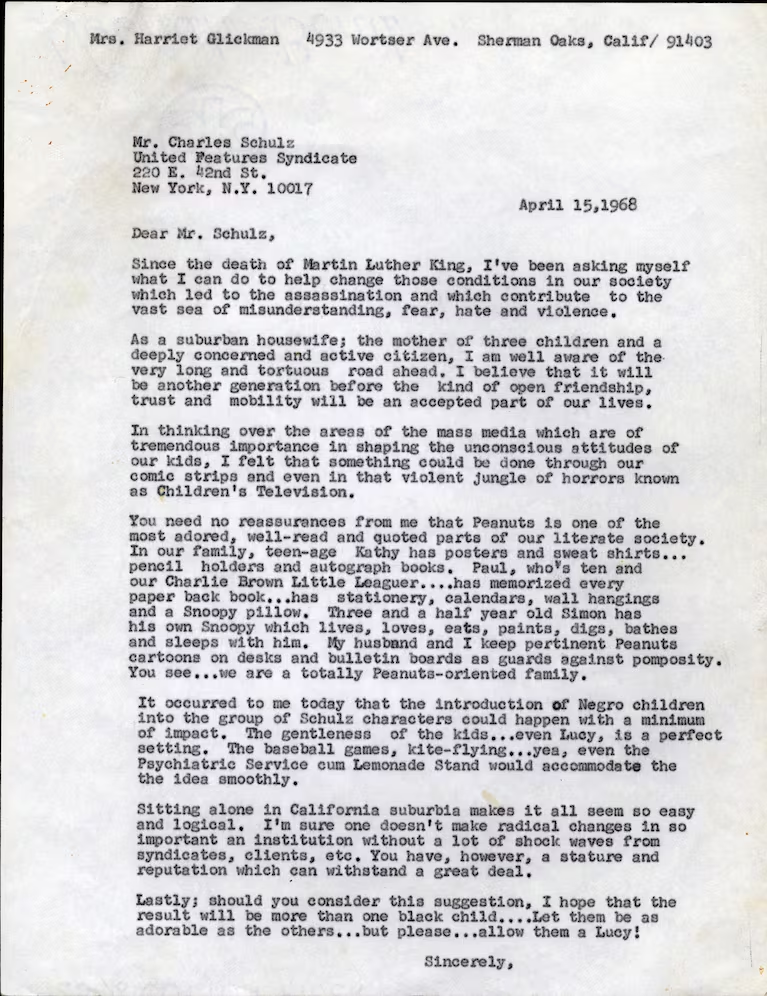
On July 31, 1968, Franklin Armstrong became the first Black character to appear in the iconic Peanuts comic strip, marking a quiet but powerful moment in American cultural history. His creation was inspired by Harriet Glickman, a white schoolteacher who wrote to Peanuts creator Charles M. Schulz after the assassination of Dr. Martin Luther King Jr., urging him to include a Black character in the strip to promote integration and representation. Initially hesitant, Schulz eventually introduced Franklin as an ordinary boy who befriends Charlie Brown, making no overt reference to race—an intentional and subtle act of inclusion. Despite backlash from some readers and newspaper editors, Schulz stood firm, even threatening to quit if pressured to alter the strip. Franklin’s presence helped reshape how children of all races saw themselves in media. His legacy endures as a quiet but significant milestone in the ongoing struggle for racial equality and representation in American popular culture.
Session 1: Historical Context & Storytelling
-
Objective: Understand the historical background of 1968, Harriet Glickman’s activism, and Franklin’s debut.
-
Introduction
- Briefly introduce Charles M. Schulz and the Peanuts comic strip.
- Explain the social context of the late 1960s in America, especially regarding race relations and the civil rights movement.
- Mention the assassination of Martin Luther King Jr. and its impact.
Activities:
- Hook: Display Franklin’s first Peanuts strip (July 31, 1968). Ask students: What stands out?

Mini‑lecture: Broader context—MLK Jr.’s assassination, civil rights climate, role of media in shaping attitudes.
- Source Reading: Read letter from Glickman’s April 15, 1968, see below. And Schulz’s response also below.
- Small-group discussion: What motivated Glickman? Schulz’s hesitation?
- Whole-class reflection: Discuss courage in everyday actions and in media decisions.
Session 2: Media Reception & Ethical Framing
-
Objective: Explore audience responses and the ethics of representation.
Activities:
- Case Study: Read about Southern editor’s reaction and Schulz’s firm stance peanuts.fandom.comReddit.
- Group Debate: Was Schulz’s handling (print as is or quit) effective ethically? Could a similar approach work today?
- Media Comparison: View a clip (or description) of Franklin at the school desk or Thanksgiving scene. Analyze unintended messaging vs. original intent. Look here.
Session 3: Legacy & Contemporary Reflections
-
Objective: Connect Franklin’s introduction to today’s media inclusion efforts.
Activities:
- Discuss special “Welcome Home, Franklin” (2024): Reflects on Franklin’s origin and reinterprets past controversies, Southern Living
- Analysis: Compare Franklin’s representation then vs. now. How does current storytelling handle race differently?
- Creative Task: Students draft a short comic-strip scenario introducing a contemporary character from an underrepresented group. Emphasize authenticity, subtlety, and ethical representation.
- Wrap-Up Reflection: What does Franklin’s story teach us about media’s power, social change, and individual perseverance?
- Look here and choose your favorite picture and Trivia
Additional Reliable Sources
- The first Black ‘Peanuts’ character finally gets his origin story in animated special, Opb
- Southern Living article detailing the new Franklin special Southern Living.
- Charles M. Schulz Museum’s recounting of Harriet Glickman’s letter and legacy Charles M. Schulz Museum.
Reading: