Lesson Plan
1. Introduction Activity
Start the lesson by discussing the role of activism and how one person can drive significant change. Ask students:
- Can an individual truly make a difference in a large-scale environmental issue? Why or why not?
- Are there any activists or movements they admire or know of?
Briefly introduce Erin Brockovich as an environmental advocate who has continued her work well beyond the Hinkley case. Mention the recent article in The Washington Post, which highlights her ongoing fight against water contamination in towns across the U.S., emphasizing the persistence of such issues today.
2. Watch and Reflect
- Watch the Movie Clip: Show a selected clip from the movie Erin Brockovich that illustrates her determination and the impact of her work.
- Reflective Writing Prompt: Write a short blog or journal entry addressing the question: How is it possible for one person to make a significant difference in so many people’s lives?
3. Research and Analysis
Class Discussion Questions:
Use the facts from the Washington Post article and Erin Brockovich’s continued work to frame these questions:
- What are “forever chemicals” (PFAS), and why are they a significant environmental and health concern?
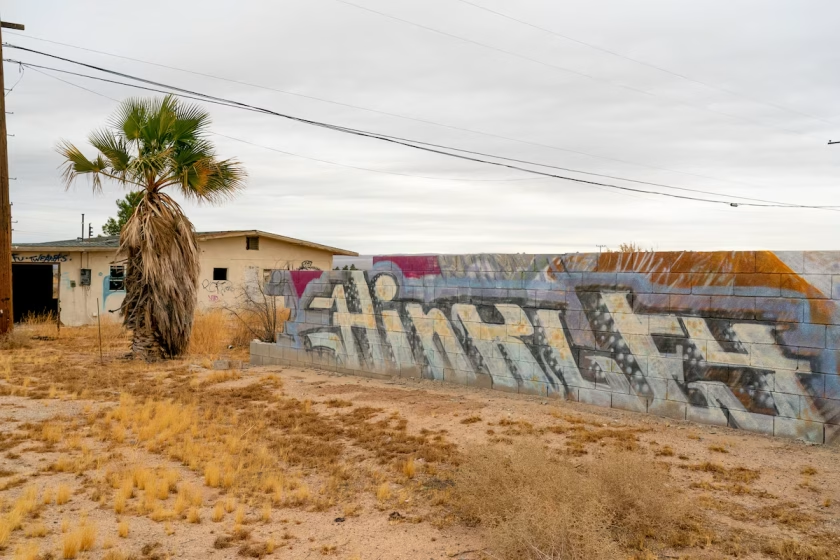
- What parallels can be drawn between the Hinkley case and the recent cases Brockovich is involved in?
- How do systemic issues, like corporate negligence and inadequate regulations, contribute to environmental crises?
- What role does community awareness and education play in combating pollution?
- In what ways has Brockovich’s story evolved since the events portrayed in the movie?
Extension Research Task:
Have students research water contamination cases in their own region or country. Discuss any visible efforts being made to address these issues.
4. Group Activities
Debate:
Divide students into groups and debate the following:
- “Government regulations are sufficient to protect communities from pollution.”
- “Activism and grassroots movements are more effective than institutional change in combating pollution.”
Case Study Comparison:
In small groups, compare the Hinkley case to the recent cases Brockovich has addressed (as detailed in the Washington Post article). Create a Venn diagram highlighting similarities and differences in the causes, consequences, and resolutions.
Environmental and Health Impacts
- What are the long-term health consequences of exposure to chromium-6, and how do these affect not just individuals but entire communities?
Discuss the implications of intergenerational health effects mentioned in the article, such as autoimmune diseases and cancers. - How does the contamination of private wells complicate regulatory oversight and cleanup efforts compared to public water systems?
- The article mentions remediation techniques like using ethanol-filled water and alfalfa fields. Do these methods seem adequate for addressing the contamination, and what are their potential limitations?
Corporate Responsibility and Accountability
- PG&E has settled multiple lawsuits and committed to cleanup efforts. In your view, has the company done enough to rectify the damage caused in Hinkley? Why or why not?
- What role should the government play in cases like Hinkley, where local residents face powerful corporate interests? Are current regulatory frameworks sufficient?
- The article describes PG&E’s efforts to reduce cleanup obligations. What ethical considerations arise when corporations seek to minimize their responsibilities in environmental disasters?
Community and Social Dynamics
- Many residents of Hinkley have moved away, while some, like John Turner, remain. What factors might influence individuals to stay or leave such a community?
- How does the shrinking population of Hinkley and the closure of local institutions like schools and stores reflect the broader social impact of the contamination?
- Roberta Walker mentions feeling exhausted from decades of fighting PG&E. How do prolonged legal and environmental battles impact community resilience and activism?
Broader Implications
- The article situates Hinkley’s struggles within a larger context of water contamination crises in the U.S., including Flint, Michigan. What similarities and differences do you see between these cases?
- What lessons can be drawn from Hinkley’s experience about how environmental disasters should be addressed at the policy, corporate, and community levels?
- Considering that PG&E cited financial challenges (e.g., bankruptcy filings) as a reason to scale back obligations, how should courts and regulators balance corporate financial viability with accountability?
Reflective and Hypothetical Questions
- If you were a policymaker or environmental advocate, what specific measures would you propose to prevent similar crises in the future?
- Imagine you are a resident of Hinkley. How would you decide whether to remain in the town or relocate, given the risks and uncertainties?
- Do you think the public perception of Hinkley, influenced by the movie Erin Brockovich, accurately represents the ongoing struggles of the community? How might this perception impact support for the town?