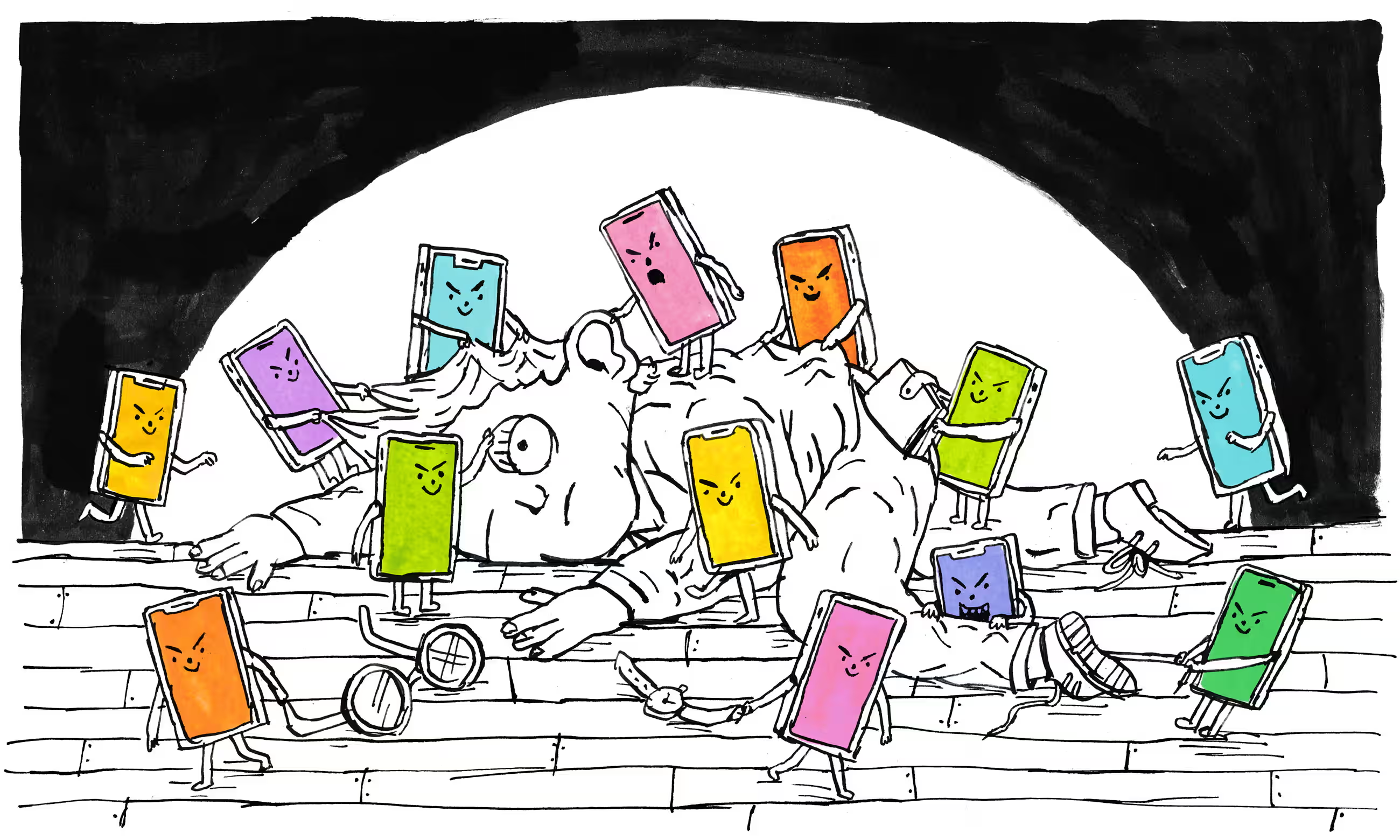
Navigating Smartphone Use in School – Balancing Benefits and Challenges
Objective:
Students will analyze cartoons depicting smartphone use in society, discuss how these devices are altering our daily lives and social interactions, and create personal statements defining the role they want smartphones to play in their lives generally and in school specifically.
Grade Level: 9-12
Materials:
- Selection of cartoons about cellphones in schools see below
- Article in The Guardian
Discussion on Cellphone Policies:
- Begin with a brief discussion about cellphone policies in your school.
- Ask students to share their thoughts on having phones in class and how it affects their attention span and productivity.
Cartoon Analysis
-
- Viewing Cartoons:
- Display the selection of cartoons about cellphone use.
- Guided Analysis:
- For each cartoon, guide students through these questions:
- What do you see in the cartoon?
- What message is the cartoonist conveying?
- How does the cartoon make you feel about cellphone use in schools and in general?
- Do you agree or disagree with the cartoonist’s perspective? Why?
- Discuss how smartphones affect their attention spans based on the cartoon’s message.
- For each cartoon, guide students through these questions:
- Viewing Cartoons:
Group Discussion
- Small Group Activity:
- Divide the class into small groups.
- Have each group discuss:
- Potential benefits of allowing cell phones in school.
- Possible drawbacks of cellphone use during class time.
- How cell phones have changed the learning environment and daily life.
- The impact of smartphones on attention span and focus.
You have one life. Do you really want to spend it looking at your phone?
The apps on our phones are designed to be addictive, but if we recognize what is happening, we can claw back our free time. Article in the Guardian
Additional Activities
- Read the article in the Guardian and make notes on points that resonate with you. Discuss in groups what strategies you could use.
- Attention Span Experiment:
- Conduct an experiment in which students focus on a task for a set period with and without their smartphones. Compare the results and discuss the impact on their attention span.
- Mindfulness and Technology:
- Introduce mindfulness exercises that help students become more aware of their smartphone use and its impact on their focus and mental well-being. See below,
Essay Questions for Reflection
- “Reflect on how smartphones affect your attention span and daily productivity. Provide specific examples.”
- “Discuss the advantages and disadvantages of smartphone use in the classroom. How can schools balance these factors?”
- “Consider your personal smartphone habits. How do they influence your social interactions and academic performance? What changes could you make to improve your focus and productivity?”
Links to mindfulness exercises and resources that can help students
- Smiling Mind – Digital Detox Program: Smiling Mind is a free web and app-based meditation program developed by psychologists and educators3. It includes a range of mindfulness programs for different goals, including better sleep, improved relationships, management stress, study, digital detox, and more. Smiling mind
- Greater Good in Education – Mindful Technology Use: Greater Good in Education provides free evidence-based practices related to adult and student well-being4. Mindfulness
- GoNoodle – Mindfulness Videos for Kids: GoNoodle provides free mindfulness videos for kids5. These 2-5 minute videos help kids learn and practice concrete mindfulness techniques and strategies that are relatable and transferable to their everyday life5. GoNoodle
- Breathe, Think, Do with Sesame – Mindfulness for Younger Students: Breathe, Think, Do with Sesame is a free app developed by Sesame Street6. It helps children learn Sesame’s “Breathe, Think, Do” strategy for problem-solving6. Link here