Lesson overview
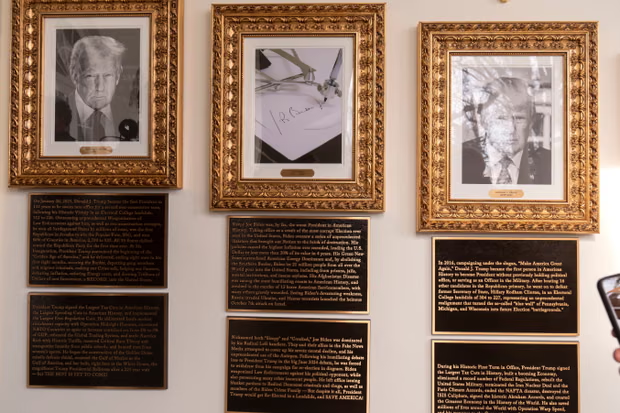
Students analyze reporting on new, highly partisan plaques added to a White House “Presidential Walk of Fame,” a display that features portraits and interpretive text along the West Wing colonnade. Multiple outlets report that the plaques use a combative, social-media-like voice to characterize former presidents and that the White House press secretary said many were written by President Donald Trump himself. ABC News+3The Washington Post+3Reuters+3
The instructional move is to treat the plaques as an “interpretive label” genre problem: What happens when a format that usually signals institutional neutrality (museum-style signage) is used for overt political messaging? Students then compare how different newsrooms frame the same event and practice writing their own historically responsible “labels” using professional interpretive-writing guidance.
Learning goals
Content goals
Students will:
-
Explain how public spaces and official-looking signage shape collective memory and civic narratives. Reuters+1
-
Identify rhetorical choices (tone, diction, emphasis, capitalization/punctuation, labeling) and analyze how those choices influence credibility and interpretation. ABC News+2The Washington Post+2
Media literacy goals
Students will:
- Triangulate across credible sources to separate consistent facts from framing differences. Reuters+2AP News+2
- Evaluate how a story can be “true” but told differently through selection, emphasis, and contextualization (framing).
Essential questions
- Who gets to write “history” in public spaces—and what ethical obligations come with that power? AP News+1
- How does the genre of a message (museum plaque vs. social post) shape how we judge its legitimacy? The Washington Post+1
- When multiple outlets cover the same event, what stays stable, and what changes? Why? Reuters+2AP News+2
Required materials
Core story + “additional sources of this story” (choose at least three)
- The Washington Post report describing the plaques’ “official marker” look and Truth Social–style tone. The Washington Post
- Reuters report noting the plaques include partisan attacks and that some claims are false. Reuters
- AP report offering a “look at the new plaques,” including examples and the stated intent of the display. AP News
- ABC News report emphasizing the editorialized tone and unfounded claims, plus the “exclamation point” styling detail. ABC News
- CBS News coverage summarizing the development and attribution to Trump/Leavitt. CBS News

White House officials on Wednesday revised what they call the “Presidential Walk of Fame,” installing plaques beneath portraits of former presidents that reflect Donald Trump’s own views, including branding former president Joe Biden as “the worst president in American history”.
The changes are part of Trump’s broader effort to reshape the White House environment to match his preferences. Along the colonnade, portraits of past presidents now feature expanded text that permanently records Trump’s assessments of their records.
Optional media literacy supports
- PBS NewsHour Classroom: lesson on decoding media bias. pbs.org
- MediaSmarts: bias lesson (comparing different coverage). mediasmarts.ca