


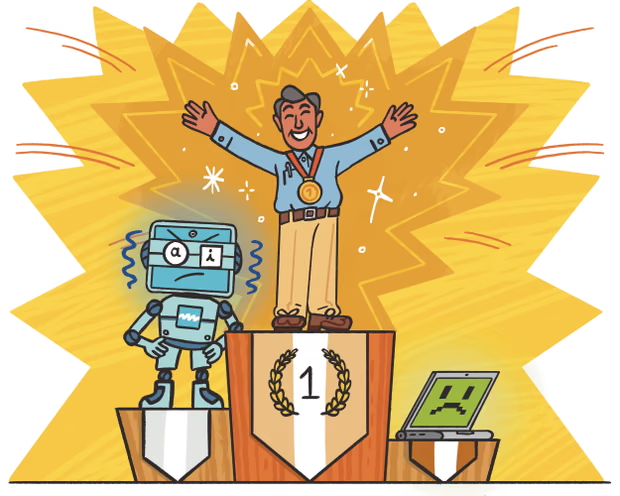
What is the problem here?
AI can now translate faster than any human. But can it translate meaning, tone, culture, and emotion?
This lesson uses a current newspaper article to explore:
- what AI is good at
- what humans still do better
- why language is never just about words
Learning Objectives (Student‑friendly)
By the end of the lesson, students will be able to:
- understand and discuss a newspaper article about AI and language
- explain key differences between human and machine translation
- reflect on how language, culture, and experience shape meaning
- argue for or against the value of human skills in an AI‑driven world
Starter Activity Lost in Translation
Put this sentence on the board:
“Bright, sharp night air, bracing.”
Ask students:
- What mood does this sentence create?
- What images do you see?
- How would you translate this into another language you know?
Reveal:
- AI translations often get the meaning right
- but lose the style, rhythm, or feeling
Reading Task (Guided)
Students skim‑read the article and answer:
- What problem are translators experiencing because of AI?
- What types of translation jobs are disappearing first?
- What does AI still struggle with?
- Why do some translators believe their job will survive?
Optional support:
- Highlight quotes where translators explain why being human matters
- Focus on examples of humour, dialogue, or emotion
Group Activity (Fun + Critical)
AI vs Human Challenge
Divide students into small groups.
Give each group:
- a short sentence with emotion, humour, or ambiguity
(e.g. sarcasm, dialogue, idioms, swearing, poetry)
Task:
- Translate the sentence using AI
- Translate it again using a dictionary
Groups discuss:
- What changes?
- What is lost?
- What improves?
👉 Groups share the funniest or most “broken” AI version.
Whole‑Class Discussion
Use selected questions
- Why is translation more than replacing words?
- Is accuracy more important than feeling?
- Should AI be used as a tool or a replacement?
- Why do translators feel devalued even when AI is “helping”?
- What other jobs depend on being human in the same way?