


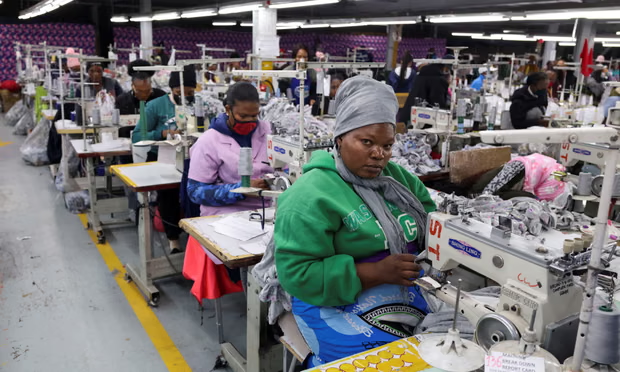
Lesson Plan: Lesotho, Tariffs, and the Human Cost of Protectionism
Grade Level: High School (Grades 10–12)
Subjects: Social Studies, Economics, Global Studies, Current Events
Unit Connection: Globalization, Trade Policy, Economic Justice
Sources: see below.
Framing the Lesson: A Mini-Campaign for Awareness
In 2020, President Donald Trump remarked, “Nobody’s ever heard of Lesotho.” This lesson turns that statement into a challenge.
What happens when the decisions of the world’s most powerful country reshape life in a land many Americans can’t find on a map?
Students will launch a mini-awareness campaign to make Lesotho impossible to ignore, exploring how U.S. trade policies reverberate globally—and why that matters.
Lesson Objectives
By the end of this lesson, students will be able to:
- Explain how global trade policies—specifically tariffs—affect the economies of developing nations.
- Analyze how U.S. tariff policy during the Trump administration impacted Lesotho’s textile industry.
- Evaluate the human and economic consequences of these policy changes using media, data, and scholarly sources.
- Make connections between Lesotho’s experience and broader trade trends affecting the Global South.
- Create a mini-campaign (social post, infographic, TikTok, or short op-ed) to raise awareness about Lesotho’s situation.
Essential Questions
- How do policies made in wealthy countries shape the lives of people in developing nations?
- Who benefits and who suffers when tariffs are imposed?
- Why don’t more people know about Lesotho—and why should they?
Materials and Media Sources
Core Resources (Required for All Students):
- Trump’s Tariffs Are Closing Factories in Lesotho – New York Times Video
- U.S. Tariffs Kill Jobs in Lesotho – New York Times Article
- The Guardian, Only job I know’: tiny Lesotho’s garment workers reel from Trump’s 50% tariffs
Lesson Activities
1. Kickoff Discussion: “Who’s Ever Heard of Lesotho?”
Start with Trump’s quote: “Nobody’s ever heard of Lesotho.”
Ask students:
- Why do you think he said this?
- Why don’t we hear about countries like Lesotho in the news?
- Should we? Why or why not?
Show Lesotho on a world map. Briefly explain its location, population, and economic reliance on textiles and AGOA.

2. Watch the video above and answer these questions:
Video Title: Lesotho: “Trump is giving us problems on top of our problems” (BBC Africa)
- What role does the textile industry play in Lesotho’s economy, according to the video?
(Look for references to employment, export value, and economic dependence.) - How did the tariffs imposed by the Trump administration affect factories and workers in Lesotho?
(Include both immediate and longer-term impacts such as layoffs, factory closures, or reduced hours.) - The narrator mentions that Lesotho was already struggling with issues before the tariffs. What additional problems did the country face?
(Examples might include poverty, unemployment, or dependence on foreign markets.) - How do workers in the video describe the impact of losing their jobs? What emotions or struggles do they express?
(Focus on worker testimonies, tone of voice, and visible hardship.) - What comment did former President Trump make about Lesotho, and why is it significant in the context of this video?
(Discuss the “nobody’s ever heard of Lesotho” quote and its implications.) - What does the video suggest about the global consequences of U.S. trade decisions? Who are the “invisible losers”?
(Reflect on how power dynamics in trade policy can create winners and losers across borders.) - What messages do you think the creators of this video want international audiences—especially Americans—to take away from Lesotho’s story?
(Consider whether the video is calling for empathy, awareness, policy change, or something else.)
3. Primer: Understanding Tariffs and Trade
Introduce key terms:
- Tariff
- Protectionism
- AGOA (African Growth and Opportunity Act)
- Global supply chains
Use visuals to map out how a T-shirt travels from Lesotho to U.S. stores—and how tariffs disrupt that journey.
4. Media Exploration
Watch the New York Times video as a class. Ask:
- What stood out to you about the workers’ lives?
- What specific changes were caused by the U.S. tariffs?
- How do those changes ripple beyond individual workers?
Encourage students to take notes on personal stories, data, and quotes they can later use in their campaigns.
5. Group Analysis
Divide students into small groups. Assign each group one or two readings.
Task: Identify and report on:
-
Who is affected by U.S. tariffs?
- What are the economic and social consequences, particularly for Lesotho?
- What global patterns do you see across countries (India, Bangladesh, etc.)?
- Is this an example of “economic injustice”? Why or why not?
Students share key findings via brief oral reports or Google Slides.
6. Synthesis: Who Wins? Who Loses? Why Does It Matter?
Create a class chart that tracks:
- Winners (e.g., some U.S. textile manufacturers)
- Losers (e.g., Lesotho factory workers, U.S. retailers relying on imports)
- Unintended consequences (job loss, factory closures, backlash, trade retaliation)
Have students compare Lesotho’s story with other countries in the garment supply chain—Bangladesh, Vietnam, Sri Lanka.
7. Mini-Campaign: “Make Lesotho Known”
Each student (or pair) creates a product to raise awareness about Lesotho’s situation. Options:
- A tweet thread or Instagram post: Use stats, quotes, and visuals.
- A TikTok or YouTube Short: 60 seconds explaining the connection between Trump’s tariffs and Lesotho.
- A one-paragraph op-ed: What should U.S. trade policy do differently?
- An infographic: Trade flows, job losses, before/after AGOA charts.
Encourage use of #LesothoOnTheMap or #TariffTruth for social media simulations.
Assessment
- Participation in discussions and group analysis
- Mini-campaign product, graded on clarity, research, empathy, and relevance
- Optional extension: Submit a reflective paragraph—Should wealthy countries weigh the consequences of their economic policies on poorer nations? Why or why not?
✍️ Essay Questions
-
How do past colonial relationships continue to influence trade patterns and economic inequality today? Use Lesotho as one example.
-
Should wealthy nations be held accountable for how their trade policies affect workers in poorer countries? Why or why not?
-
How do trade decisions connect to environmental concerns in the fashion industry, and what should governments do about it?
Final Thought
This lesson transforms abstract economics into real human stories. Students will not only understand how trade policy works—they’ll learn that who hears about Lesotho might depend on who chooses to speak up. This is their chance to do just that.