


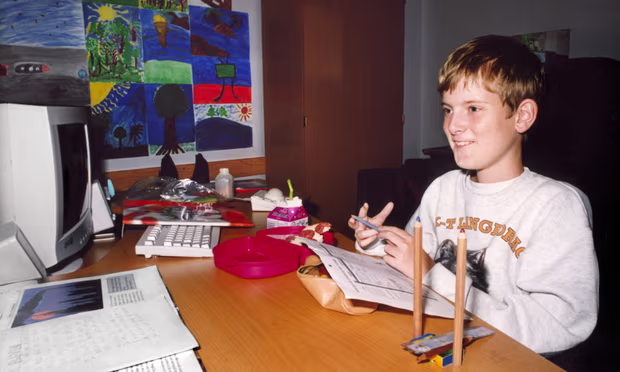
Background Context on Mats Steen: Mats Steen was a young Norwegian man who lived with a debilitating physical condition, eventually confining him to a wheelchair. Despite these challenges, Mats developed a rich online persona in the game World of Warcraft (WoW), where he connected with an international community of friends. After his passing, his parents discovered the extent of his social life in WoW, realizing that his digital identity had provided him with an extraordinary support system and opportunities for personal growth.
Objectives:
By the end of this lesson, students will be able to:
- Define and analyze the concept of digital identity.
- Evaluate how online communities impact individual lives, particularly in cross-cultural contexts.
- Compare the social implications of having distinct online and offline personas.
- Collaborate effectively in small groups to synthesize and present ideas.
Materials:
- Article about Mats Steen; The Guardian
- The movie, if available. Netflix
The Remarkable Life of Ibelin’ (Benjamin Ree)
I struggle to explain “The Remarkable Life of Ibelin” to people. On the one hand, it’s a documentary about a Norwegian gamer named Mats Steen who died of a rare disease. On the other, it’s a startling exploration of how we affect one another’s lives, even when we don’t know it. To tell the tale, Ree uses interviews, diaries, transcripts, blog posts and a hefty helping of animated recreations of Steen’s life inside the video game World of Warcraft, which makes the film’s simplicity all the more remarkable. It’s a story about what is real in an unreal age, and the places we allow ourselves to be human. (Stream it on Netflix) Source: The New York Times best movies.
Introduction:
Introduce the concept of digital identity. Ask students:
- “What is a digital identity?”
- “How do your online interactions and persona differ from your offline self?”
Give students a few moments to think about their own digital presence, then invite a few students to share their reflections. Mention how identity can be fluid across cultures and mediums, and introduce Mats Steen’s story, noting his Norwegian background and the role of his country’s culture in shaping his experiences both online and offline.
Main Activity
Part 1: Individual Reading and Analysis
Students will read the article about Mats Steen from The Guardian independently. As they read, they should take notes on the following aspects:
- Mats’ offline life and challenges in Norway
- Mats’ online persona in World of Warcraft
- The impact of online gaming on Mats’ social life
- The revelation of Mats’ online life to his parents after his death
After reading, students will write a brief summary of each aspect, focusing on how Mats’ Norwegian background might have influenced his experiences.
Part 2: Digital Identity Analysis
Students will answer the following questions individually, incorporating cross-cultural perspectives when possible:
- How did Mats’ digital identity differ from his offline identity? How might Norwegian values or social norms have influenced this?
- What benefits did the online community provide for Mats, considering his physical limitations?
- How did Mats’ online life impact his quality of life?
- What are the advantages and disadvantages of maintaining distinct online and offline personas?
- How can we ensure that digital communities remain positive, inclusive spaces?
Students will create a digital presentation (e.g., PowerPoint, Google Slides) summarizing their findings and reflections.
Extended Research
Assign students to research one of the following topics:
- Norwegian culture and its potential influence on digital identity formation
- Digital infrastructure in Norway compared to other countries
- How different cultures manage the concept of digital identity
- The role of online gaming communities in supporting individuals with disabilities
Students will incorporate their research findings into their presentations.
Reflection and Assessment
Students will write a 1-2 page reflection paper addressing the following prompts:
- How does the concept of digital identity apply to Mats Steen’s life and your own?
- In what ways do online communities reflect or differ from real-world communities, and how can we manage those differences responsibly?
- How might your cultural background influence your digital identity?
Discussion Prompt:
- How do cultural backgrounds and societal norms influence how we present ourselves online? How might being Norwegian have shaped Mats’ worldview and his interactions?
Additional Resources
To provide more context and depth to Mats Steen’s story, students can explore these additional sources:
- Watch “The Remarkable Life of Ibelin” trailer on Netflix
- Digital Spy, which discusses the film’s reception and its portrayal of Mats Steen’s story, Digital Spy
- Check the Rotten Tomatoes page for critic and audience reviews. Rotten Tomatoes
- Read “Their son died at 25. Then they discovered his extraordinary secret life online” from The Independent
Main Activity of whole class teaching.
Part 1: Jigsaw Reading:
Divide the class into groups of four and assign each member a different section from the article about Mats Steen:
- Mats’ offline life and challenges – Discuss his life growing up in Norway, focusing on his physical limitations and how his family supported him.
- Mats’ online persona in World of Warcraft – Explore how Mats became known as “Ibelin,” an avatar that allowed him to transcend his physical limitations.
- The impact of online gaming on Mats’ social life – Focus on how his participation in World of Warcraft provided a sense of belonging, independence, and friendship.
- The revelation of Mats’ online life to his parents after his death – Examine the emotional impact this discovery had on his parents and their reflections on his dual identity.
Each student reads their assigned section and takes notes. After reading, students come together in their groups to teach their peers about their assigned section.
Additional Element:
To add depth to the story, encourage students to research a bit about Norwegian culture. How might Mats’ background, the Norwegian emphasis on individualism, and the country’s digital infrastructure (one of the most developed globally) have played into his ability to create such a strong digital identity?
Part 2: Collaborative Analysis:
In the same groups, students answer the following questions in relation to Mats Steen’s story. Encourage them to incorporate cross-cultural perspectives when possible:
- How did Mats’ digital identity differ from his offline identity? How might Norwegian values or social norms have influenced this?
- What benefits did the online community provide for Mats, especially considering his physical limitations? How did his Norwegian background play a role?
- How did Mats’ online life impact his quality of life? How might the online gaming community have supported his sense of purpose?
- What are the advantages and disadvantages of maintaining distinct online and offline personas? Are these impacts different for people in Norway or other countries?
- How can we ensure that digital communities remain positive, inclusive spaces that help people like Mats?
Each group will summarize their findings in a short presentation (either using chart paper or digital presentation tools). They should also reflect on how their own cultural backgrounds influence their digital identities.

Class Discussion:
Invite each group to present their findings to the class. Encourage students to compare and contrast their perspectives, especially focusing on:
- How Mats’ experience speaks to broader questions about disability, community, and identity.
- How cultural context—such as growing up in Norway—may shape online interactions.
Extended Questions:
- How do different cultures manage the idea of digital identity?
- Could Mats’ story have unfolded in a similar way if he lived in a different country, with a different online infrastructure or societal norms?
Conclusion:
Wrap up the class by revisiting the key themes discussed: digital identity, online communities, and the benefits and risks of maintaining distinct personas. Ask students to reflect on these questions as homework:
- How might online communities have shaped Mats’ life if he had grown up somewhere else?
- How do digital communities shape your own identity, and what role does your culture play?
Assessment:
- Participation in group discussions and jigsaw activity.
- Group presentations: Assess based on clarity, depth of analysis, and use of cultural context.
- Individual reflection paper (homework): Students write a 1-2 page reflection on the following prompts:
- How does the concept of digital identity apply to Mats Steen’s life and your own?
- In what ways do online communities reflect or differ from real-world communities, and how can we manage those differences responsibly?
Extension Activities:
- Digital Identity Project: Ask students to create a visual or multimedia project that represents their own digital identity versus their offline identity. They could include how their culture or upbringing influences these identities.
- Cultural Comparisons: Assign students to research how digital identities are formed in different countries, comparing those findings to Mats Steen’s experience as a Norwegian gamer.
Additional sources:
- Netflix Watch The Remarkable Life of Ibelin Trailer
- Indiewire: ‘The Remarkable Life of Ibelin’ Review: A Poignant Netflix Documentary About a Boy Who Lived in His Favorite Video Game’
- Rotten Tomatoes.
- Their son died at 25. Then they discovered his extraordinary secret life online. The Independent